
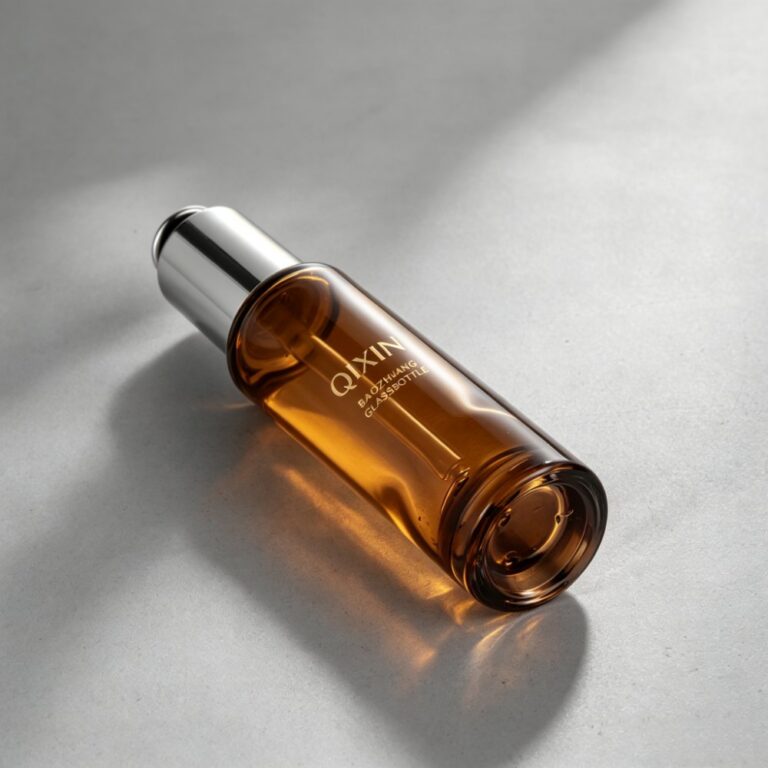
Press-Type Dropper Samples: Confirm the Top Action
When a dropper is described as press-type, ask the supplier to identify the intended top action for the exact proposed assembly. Request a clear explanation, annotated views and, where offered, a matching sample or demonstration. A closed-top catalogue photograph cannot establish the operating sequence, dispensing quantity or closure performance. Approve the identified configuration and its explanation separately from appearance.
Treat press-type as a question to resolve
Qinxin Beautypack lists a press-type dropper-bottle reference and shows an amber-coloured bottle with its top closed. The name gives the buyer a useful inquiry term, but the photograph does not reveal every moving or concealed part. Ask the supplier what the term means for the selected version rather than importing an operating assumption from another bottle.
A useful response identifies the offered assembly and describes what the intended user interacts with. Ask which element is pressed, what the supplier intends that action to do and which views explain the arrangement. These are requests for clarification. They do not establish a particular mechanism, measured output or performance result until appropriate version-specific information is supplied.
Request an explanation tied to one assembly
Ask the supplier to place the container reference and the proposed closure identifier on the same response. If several tops are shown in a catalogue, mark the selected one. A general explanation of press-type packaging may not apply to the exact combination being offered, especially when a photograph shows only the outside of a closed assembly.
Request annotated views that distinguish the closed appearance from the part the supplier wants the buyer to evaluate. If the supplier offers a demonstration or sample, ask it to identify the represented version clearly. Keep a suggested alternative on a separate line. A visually similar top should not replace the selected reference without an explicit response about the change.
Compare evidence without treating it as a test result
Different evidence answers different questions. A photograph can identify appearance, while an explanation can define the proposed action. A sample can help the buyer discuss the actual configuration. None of these alone establishes a quantified dispensing result or the suitability of the assembly for a particular formulation.
Evidence | Question it can help answer | What still needs confirmation
Closed-top photograph | Which outside reference is selected? | Internal arrangement and intended action
Annotated supplier explanation | What action is proposed for this version? | Matching sample or version identity
Identified demonstration | Does the explanation concern this assembly? | Project-specific evaluation requirements
Matching sample reference | Which configuration is being reviewed? | Any required measured performance evidence
Revised closure proposal | What changed from the selected reference? | Buyer approval of the revised scope
Keep action approval separate from a dispensing claim
A buyer may need a clear action description for product development or future consumer communication. That need should be stated in the RFQ. It should not be converted into a promise that every press delivers a particular amount. If a quantified output is part of the project, request the relevant specification and ask what supporting evaluation would apply to the exact proposed assembly.
Similarly, a catalogue-use description does not establish formulation compatibility, leakage behaviour or preservation performance. Present those requirements as separate questions. The supplier should explain which information it can provide and which project details it needs from the buyer. An unanswered requirement remains open; it is not covered by a general approval of the top’s visible action.
Clarify the sample state and the supplier’s instructions
Before reviewing a sample, ask the supplier to identify its supplied state and the intended explanation for that version. Do not write an operating sequence from a closed catalogue image. If the supplier provides instructions, keep their version linked to the sample reference so the buyer can distinguish an instruction change from a hardware change.
Ask how any presentation covering or sample-only arrangement should be distinguished from the proposed order configuration. This does not presume that such features exist; it prevents the buyer from guessing when the sample and catalogue views differ. If the explanation is unclear, request a clarified supplier response before using it as the basis of product communication.
Approve a reference that can be identified later
Retain the selected bottle reference, closure identifier, supplier explanation and sample or demonstration reference together. Record what the buyer has approved: an identified configuration and a clear proposed action description. Keep performance requirements and unresolved questions visible alongside that record, rather than silently folding them into the same approval.
For a repeat discussion, ask whether the supplier is proposing the same closure reference or a revised version. If the proposed action, appearance or assembly changes, request an updated explanation. Purchasing, product development and artwork teams should be able to identify the same version without reconstructing a long exchange of unnamed photographs.
• Identify the exact bottle and top combination.
• Ask the supplier to explain the intended action.
• Keep measured output and compatibility questions separate.
• Retain the versioned explanation with the sample reference.
Frequently asked questions
Does press-type identify a particular internal mechanism?
Not by itself. Ask the supplier to explain the term for the selected version and provide matching views or a sample reference. Do not infer a mechanism from a closed-top photograph alone.
Can the buyer promise a fixed quantity per press from a sample video?
A visual demonstration does not establish a quantified result. Any required output claim needs its own appropriate specification and supporting evaluation for the proposed assembly and project.
What if the sample action seems different from the catalogue name?
Identify the sample and catalogue reference, describe the difference and request a supplier explanation. Keep any revised closure proposal separate until the buyer approves the identified change.
What should be retained for product communication?
Keep the supplier’s version-linked explanation, the selected assembly reference and the sample identifier. Confirm unresolved points before using that information in instructions, without inventing an operating sequence from the image.
Product and contact references
Press-type dropper catalogue reference: https://qxbeautypack.com/product/30ml-premium-press-type-dropper-bottle-for-essential-oil-customizable-colors/
Related dropper-bottle catalogue: https://qxbeautypack.com/products/?product_filter=%e6%bb%b4%e7%ae%a1%e7%93%b6
Contact Qinxin Beautypack: https://qxbeautypack.com/contact/
Qinxin Beautypack blog: https://qxbeautypack.com/blog/