
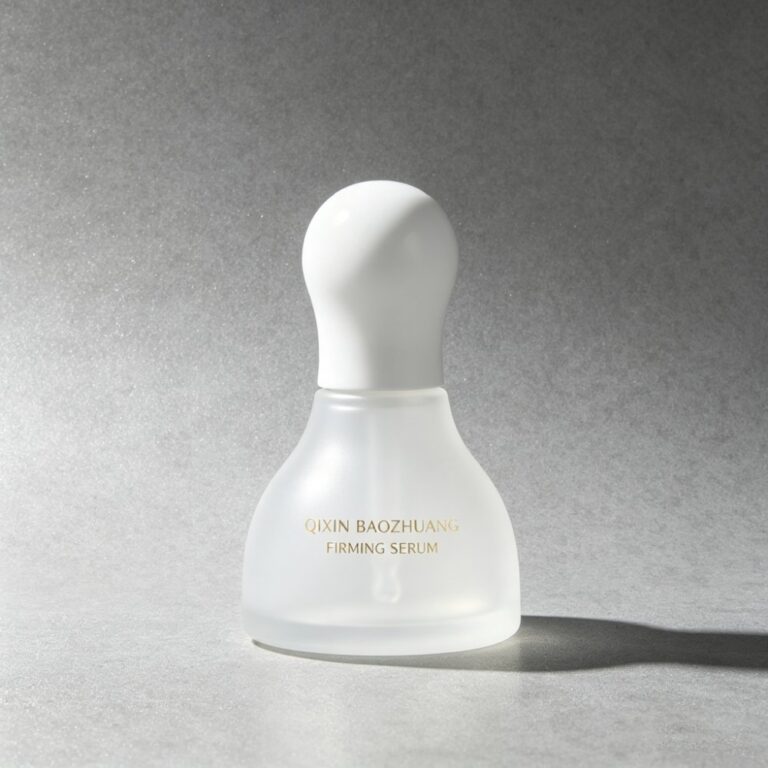
Shaped Bottle Labels: Define the Artwork Boundary
For a shaped bottle, approve the artwork boundary against an identified container reference and a supplier-confirmed decoration proposal. Ask which surface, orientation and area the proposal covers, then obtain the appropriate drawing or template. A catalogue photograph is a visual reference, not a cutting file or dimensional guide. Keep the container, artwork version and sample approval linked.
Start with the selected container rather than a generic label
Qinxin Beautypack presents a unique-shaped bottle reference with a white top and printed example text. Its outline gives the buyer a useful visual starting point, but a generic rectangular artwork file does not define how the selected container should be decorated. Identify the exact catalogue reference before discussing artwork size or placement.
Ask the supplier to confirm which container version the proposed decoration will cover. Do not transfer a template from a straight-sided bottle merely because the two references have similar catalogue descriptions. If the supplier proposes a revised container, reopen the artwork-area discussion. The purchasing and artwork teams need to be working from the same version.
Define front orientation before placing the design
A shaped container needs an agreed orientation in the artwork brief. Ask the supplier which view it considers the front of the proposed decorated version and how that view is identified on its drawing or sample. A photographed shadow or the direction of a displayed top should not be used as an unconfirmed orientation rule.
Mark the intended relationship between the artwork and the container’s visible shape on an annotated reference. Then ask the supplier to confirm the appropriate drawing or template for the proposal. Keep position and scale unresolved until the relevant information is supplied. The purpose of the annotation is to explain the buyer’s intention, not to invent manufacturing dimensions from a photograph.
Keep the proposed decoration method explicit
Ask whether the supplier offers a label-based proposal, a direct-decoration proposal or another approach for the selected reference. Do not assume a service is available because a catalogue image contains printed wording. The usable artwork boundary and the information the supplier needs may differ with the proposed method.
The following comparison organises the discussion. Each row is a proposed briefing route requiring supplier confirmation, rather than a list of services guaranteed for this bottle. Keep the supplier’s confirmed proposal with the corresponding artwork file.
Briefing route | Boundary question | Approval evidence
Proposed applied label | Which label outline and placement are offered? | Confirmed template and positioned sample
Proposed direct decoration | Which visible area is covered by the proposal? | Supplier-marked decoration drawing
Front-view visual mock-up | Which orientation and reference does it show? | Identified annotated view
Physical sample review | Does the proposed artwork match the approved area? | Sample and artwork revision identifiers
Container revision | Has the decoration boundary changed? | Reconfirmed drawing before artwork release
Distinguish artwork boundaries from the bottle silhouette
The visible outline of the bottle is not automatically the available decoration area. Ask the supplier to identify the proposed boundary and any areas that require separate discussion. A two-dimensional image can explain the design intention, but it does not independently establish the usable surface on a curved or changing outline.
For a proposed label, request the relevant template rather than tracing the container photograph as a cutting file. For a proposed direct-decoration method, ask for a supplier-marked area rather than assuming that every visible surface is covered. Keep any unanswered boundary question visible in the brief so that artwork approval is not confused with confirmation of the production proposal.
Review the proposed sample against the artwork revision
Ask the supplier to identify the container reference and artwork revision represented by any proposed sample. Review the placement and visible presentation against the agreed brief. If the sample differs, describe the difference and request a response linked to that version, rather than making an unsupported assumption about its material or decoration process.
Keep visual approval separate from additional project requirements. The appearance of a sample does not by itself establish label adhesion, rubbing resistance, formula compatibility or any other performance outcome. If these matters are required, raise them as separate questions and agree the appropriate supporting evaluation with the supplier. Do not treat catalogue appearance as evidence of a result.
Release one coherent artwork package
The approved record should contain the selected container reference, the confirmed decoration proposal, the boundary drawing or template, the artwork revision and the matching sample identifier. Ask the supplier how it wants the approved file set identified. Use that agreed naming approach so an earlier visual mock-up cannot be mistaken for the production proposal.
When the artwork or container changes, state which parts of the approval need review. A wording revision and a container-shape revision do not necessarily create the same questions. Keep the changed proposal explicit, ask the supplier to confirm its effect on the approved boundary and retain the revised record before treating the new file as released.
• Name the container and its front orientation.
• Ask which decoration proposal is actually offered.
• Use a confirmed boundary drawing or template.
• Match the artwork revision and sample identifier before approval.
Frequently asked questions
Can the catalogue photograph be used as a label cutting template?
No. It is a visual reference, without a confirmed dimensional basis. Ask the supplier for the appropriate template or drawing for the selected container and proposed label arrangement.
Does visible catalogue printing prove that custom decoration is included?
No. Ask whether the relevant service is offered and what the quotation covers. Keep the decoration proposal separate from the basic container reference until the supplier confirms it.
Can artwork from a straight-sided bottle be reused unchanged?
Do not assume so. Ask the supplier to confirm the selected shaped container’s orientation and available area, then review the artwork against the appropriate template or drawing.
What belongs in the final artwork approval?
Retain the container reference, confirmed decoration proposal, boundary drawing, artwork revision and sample identifier together. Record unresolved questions separately and reconfirm the relevant boundary when the proposal changes.
Product and contact references
Shaped bottle catalogue reference: https://qxbeautypack.com/product/30ml-unique-shaped-dropper-bottle-trendy-amp-cute-design/
Related dropper-bottle catalogue: https://qxbeautypack.com/products/?product_filter=%e6%bb%b4%e7%ae%a1%e7%93%b6
Contact Qinxin Beautypack: https://qxbeautypack.com/contact/
Qinxin Beautypack blog: https://qxbeautypack.com/blog/