
Dropper Bottle RFQs: Define the Supplied Assembly
For a dropper-bottle RFQ, define the empty packaging assembly before comparing quotations. Identify the selected bottle reference, the proposed closure configuration and whether components are supplied assembled or separately. Ask the supplier to confirm the included pieces and packing state in writing. A decorated catalogue bottle does not establish the contents, measured capacity or performance of the quoted assembly.
Make empty packaging the subject of the inquiry
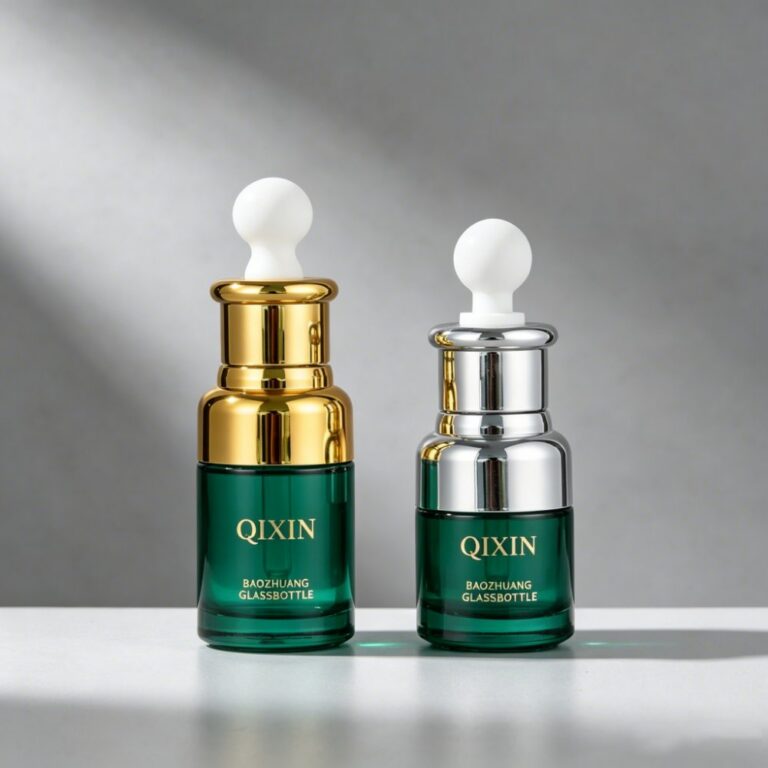
Qinxin Beautypack presents dropper bottles among its cosmetic packaging references. One catalogue card shows two green containers with different visible collars and white tops. For a packaging inquiry, state that the request concerns the empty container and the proposed closure arrangement. Do not infer that a pictured bottle contains, or is supplied with, a cosmetic formula.
Identify the exact catalogue link and mark which pictured reference you mean. If the buyer is considering more than one version, use separate inquiry lines. Ask the supplier to describe the offered container and closure against each line. This prevents a response about a general bottle family from being mistaken for a quotation covering a particular photographed assembly.
Separate the bottle body from the proposed closure
Request a supplier-defined component description. The bottle body and the visible top are separate parts of the purchasing discussion, even when shown together in a finished-looking image. Ask which closure components are included for the selected version and how the supplier identifies the complete proposed assembly. Do not assign a material or internal construction from the photograph.
If a pipette, bulb, collar or other named component is required, ask the supplier to confirm its inclusion and matching reference. These are inquiry fields, not claims that every listed item is offered with every bottle. Keep any component drawing or sample identifier tied to the quoted version. Similar appearance should not be treated as proof that independently selected parts are interchangeable.
Compare proposed supply states explicitly
A buyer may be considering a container-only purchase, a proposed container-and-closure combination or an assembled empty package. Ask which supply state the supplier actually offers. The options below are ways to structure an RFQ, rather than a statement that the catalogue includes every option. Their commercial scope needs separate confirmation.
Proposed RFQ scope | Question for the supplier | Record needed for comparison
Bottle body only | Is this supply state offered? | Identified container reference and exclusions
Body and matching closure | Which components are included? | Written component schedule
Assembled empty package | What is assembled before supply? | Confirmed assembly and packing state
Decorated reference | Does the quotation include the shown decoration? | Separate decoration proposal and approval record
Mixed version order | How is each version allocated? | Version-specific order lines
Keep capacity and compatibility out of visual assumptions
Use the catalogue reference to start the discussion, then ask the supplier for the order-specific capacity definition and relevant dimensions if they affect the purchase. Do not calculate a fill quantity from the bottle’s apparent height or from another reference pictured beside it. Any required capacity value belongs in a separate confirmed specification with its measurement basis.
The same separation applies to formula compatibility and closure performance. A bottle described for serum or essential oil does not independently establish compatibility with the buyer’s formulation or a particular dispensing result. Explain the intended packaging project to the supplier and ask what evaluation or supporting information is appropriate. Keep an unanswered question open rather than turning a product-use label into an approval.
Distinguish decoration from the container offer
The catalogue scene includes printing and metallic-coloured appearance details. Ask whether the proposed quotation covers an undecorated reference, a specific appearance option or a separately agreed decoration service. A printed brand example on an image is not evidence that the same artwork or decoration is included in the buyer’s order.
If the supplier proposes a decorated sample, give it its own identifier and record the approved artwork separately from the container and closure references. A change in decoration should not silently change the assembly description. Likewise, selecting a different collar appearance should prompt the supplier to confirm whether the offered component reference remains the same or has changed.
Approve the supply schedule with the sample record
When a sample is received, reconcile it with the proposed empty-packaging schedule. Ask the supplier to explain differences in the included pieces, assembly state or sample decoration before the order description is approved. A presentation sample and an order supply unit should be linked explicitly; the buyer should not assume that their contents or packing states are identical.
Retain the confirmed container reference, closure description, included components, supply state and sample identifier together. Ask how the selected version will be identified in commercial and packing documents. Use the supplier’s agreed identification method in the order, and request a revised schedule whenever a component or supply-state proposal changes.
• State that the inquiry concerns empty packaging.
• Identify the selected bottle and proposed closure separately.
• Confirm included components and assembly state in writing.
• Keep capacity, compatibility and decoration approvals on their own records.
Frequently asked questions
Does the pictured top come with every bottle quotation?
Ask the supplier. A catalogue image can identify the intended assembly, but the quotation must state which closure components are included, optional or excluded for the selected version.
Can the visible bottle size establish its fill capacity?
No. Request a supplier-confirmed value and its measurement basis when capacity matters. Keep that specification separate from the visual reference and do not infer it from relative sizes in a grouped photograph.
Does a serum or essential-oil description prove compatibility?
No. It is a catalogue-use description. The buyer’s formulation and required packaging behaviour need their own supplier discussion and appropriate project-specific evaluation, without assuming a result from the product name.
What makes two quotations comparable?
They should cover the same identified container, closure configuration, included component schedule, assembly state and decoration scope. If one of these fields is unresolved, show the difference before comparing the commercial totals.
Product and contact references
Dropper-bottle catalogue reference: https://qxbeautypack.com/product/20ml-30ml-dropper-bottle-for-serum-amp-cosmetic-packaging/
Related dropper-bottle catalogue: https://qxbeautypack.com/products/?product_filter=%e6%bb%b4%e7%ae%a1%e7%93%b6
Contact Qinxin Beautypack: https://qxbeautypack.com/contact/
Qinxin Beautypack blog: https://qxbeautypack.com/blog/